
Click image to browse screen designs
My Journey at Ampcus
Joining the Acquaa team at Ampcus in May 2023, I shaped the user experience for a SaaS platform built for DC Water — a large municipal water utility. Working alongside 2 product owners, 2 business analysts, and 6 developers, my role spanned both backflow prevention and fire hydrant management modules.
Acquaa introduces specialized modules for backflow prevention, fire hydrant management, and FOG modules. Through meticulous planning and collaboration, the platform optimizes water infrastructure management, improves operational efficiency, and delivers real-time insights tailored to DC Water's requirements.
What friction were operational users facing?
User research and behavioral data revealed major friction in core workflows — resulting in task abandonment, delayed incident response, and increased support overhead.
Operational users navigated long, fragmented forms with unclear system feedback — increasing cognitive load, causing validation errors, and slowing time-sensitive permit submissions.
Payment was a disjointed step outside the core workflow. Users were unsure when payments were required, whether submissions succeeded, and how to recover from failures.
Unclear system states pushed operational teams toward manual and offline workarounds — increasing effort, slowing workflows, and introducing human error on critical submissions.
“How might we redesign permit and payment workflows so that operational teams can complete critical tasks with confidence, speed, and zero ambiguity?”
What did I do in this project?
My involvement spanned substantial contribution to the backflow prevention module and comprehensive leadership in the fire hydrant module — owning the full design process from wireframes to high-fidelity, across both admin and user-facing experiences.
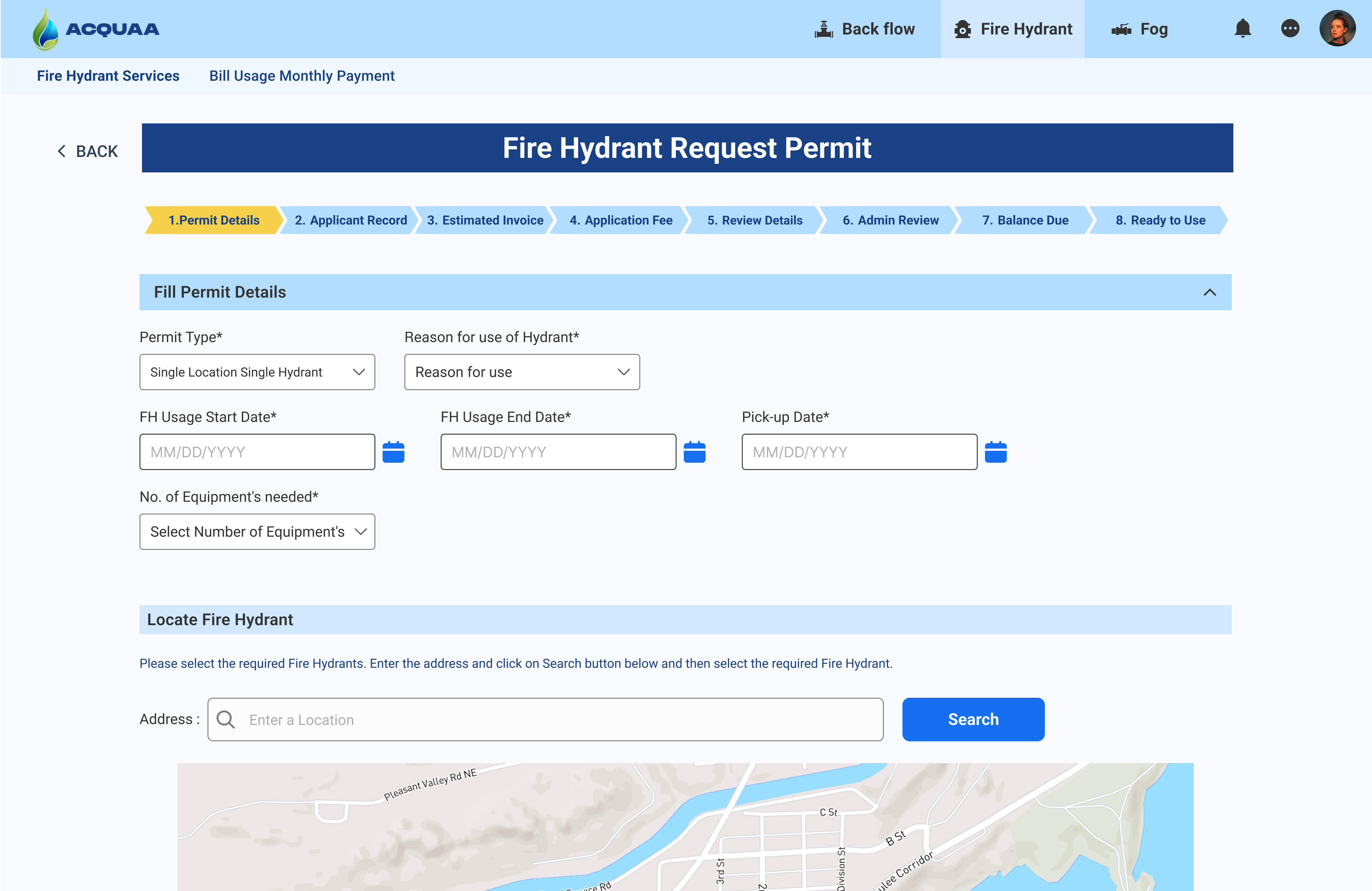
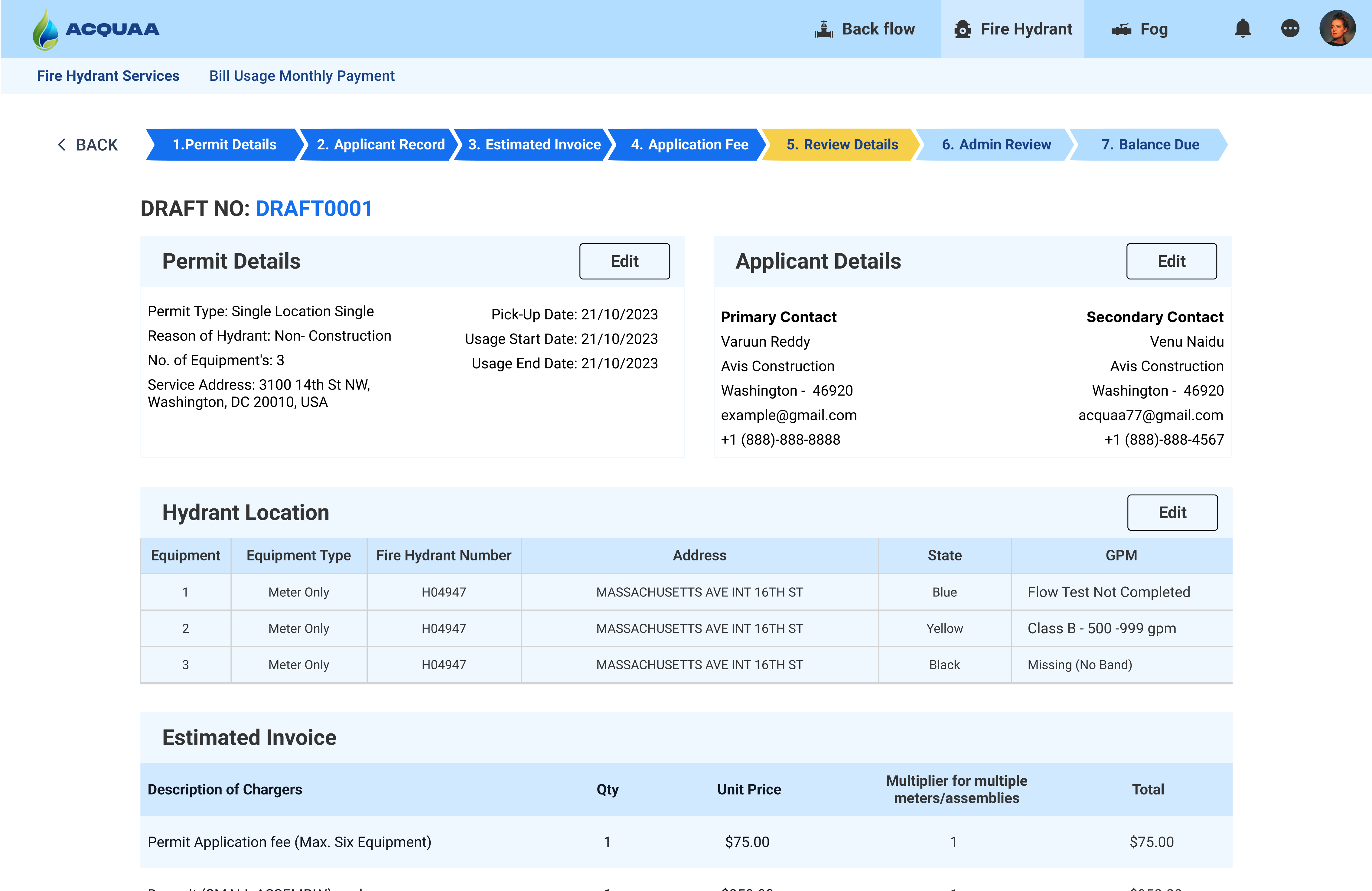
Designed complex form workflows with clear validation states, inline error feedback, and progressive disclosure to reduce cognitive load.
Led end-to-end design of the permit creation and management system — from ideation through final handoff to development.
Redesigned payment as an integrated workflow step — not a separate detour — with explicit success/failure states and recovery paths.
Implemented A/B testing that reduced bounce rate by 15%, and deployed heatmap analysis driving a 43% improvement in UX scores.
Glimpse of the Prototype
A walkthrough of the Fire Hydrant Permit creation workflow — demonstrating the redesigned step-by-step form, inline validation, and integrated payment flow.
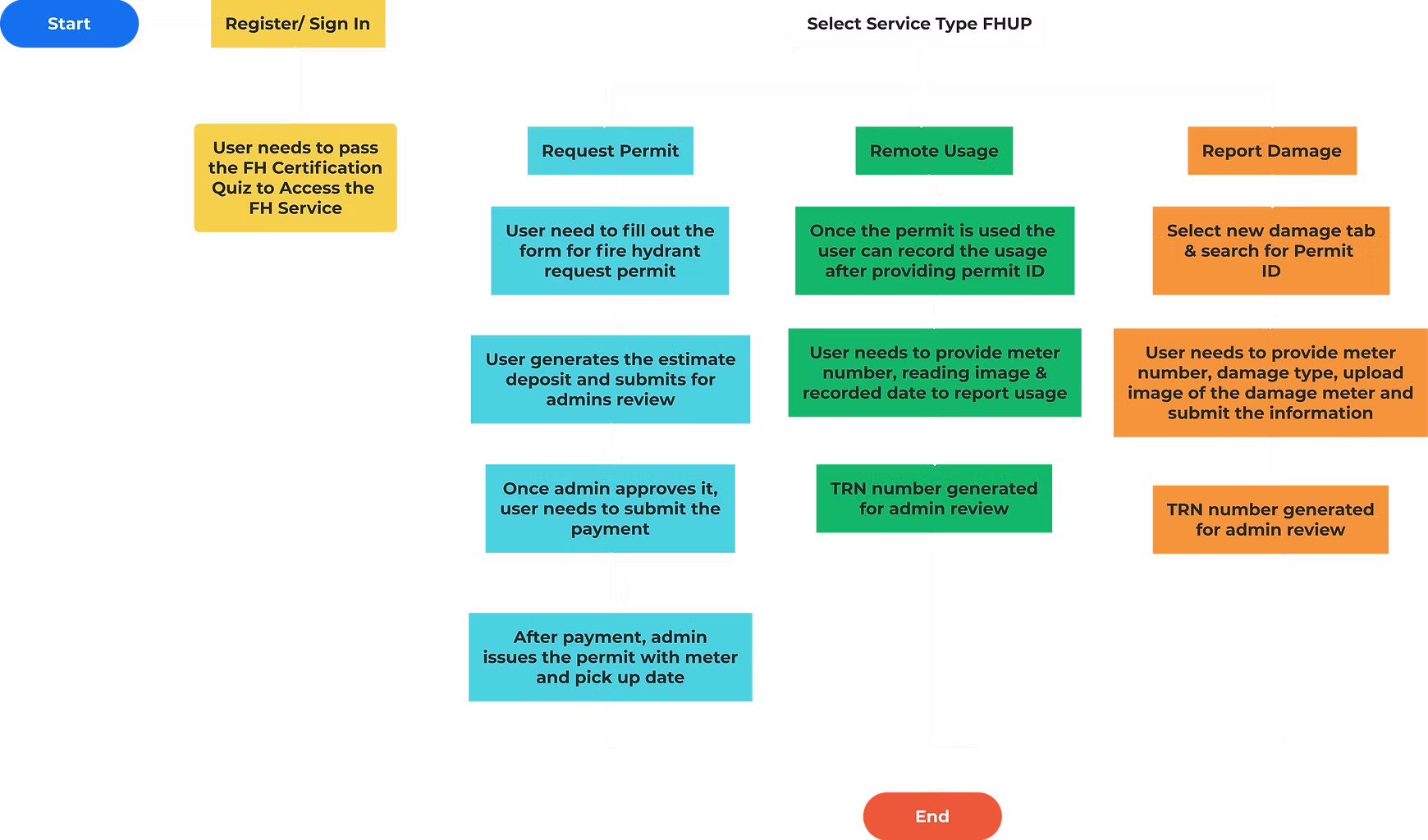
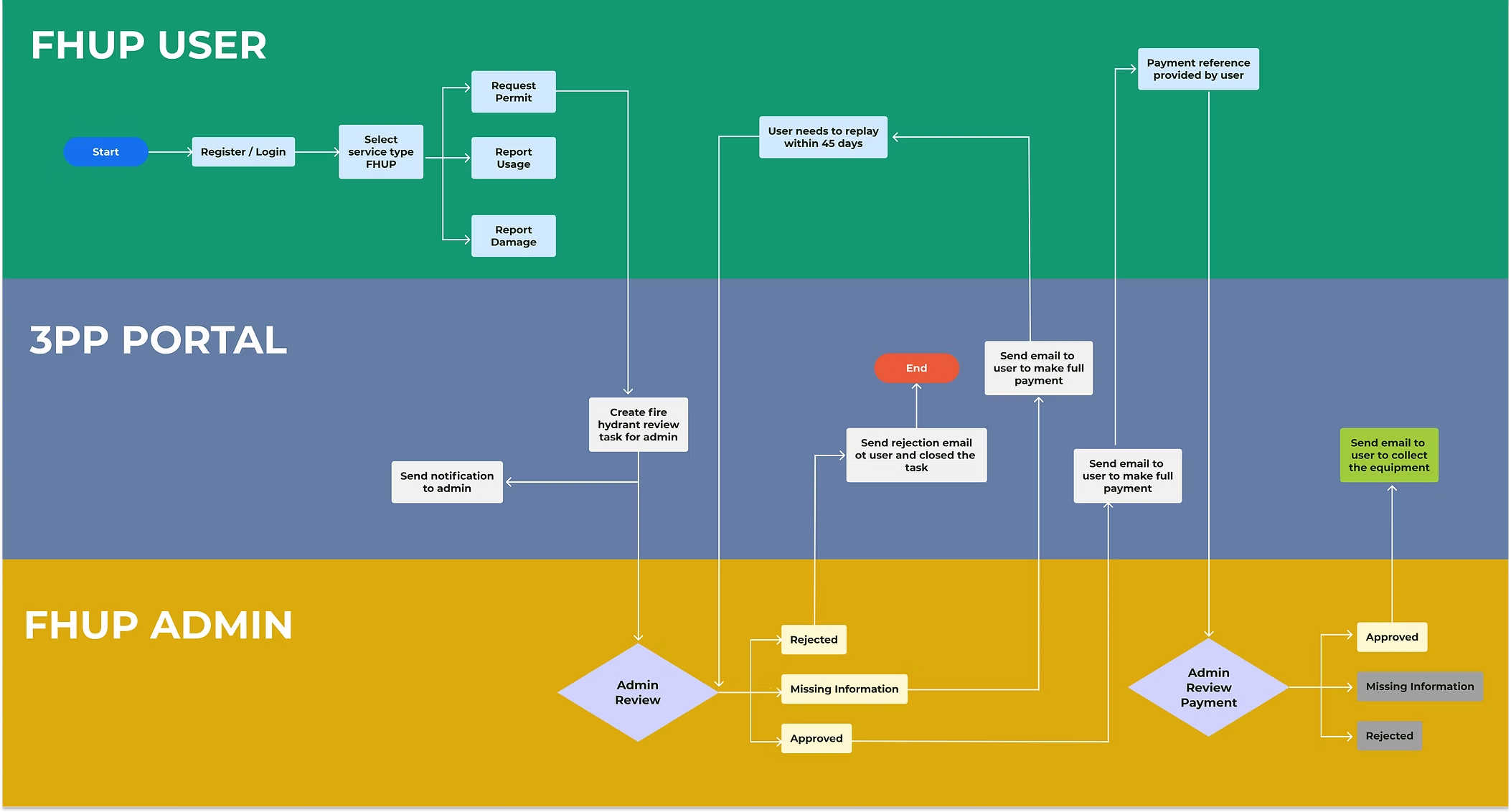
Mapping the operational journey
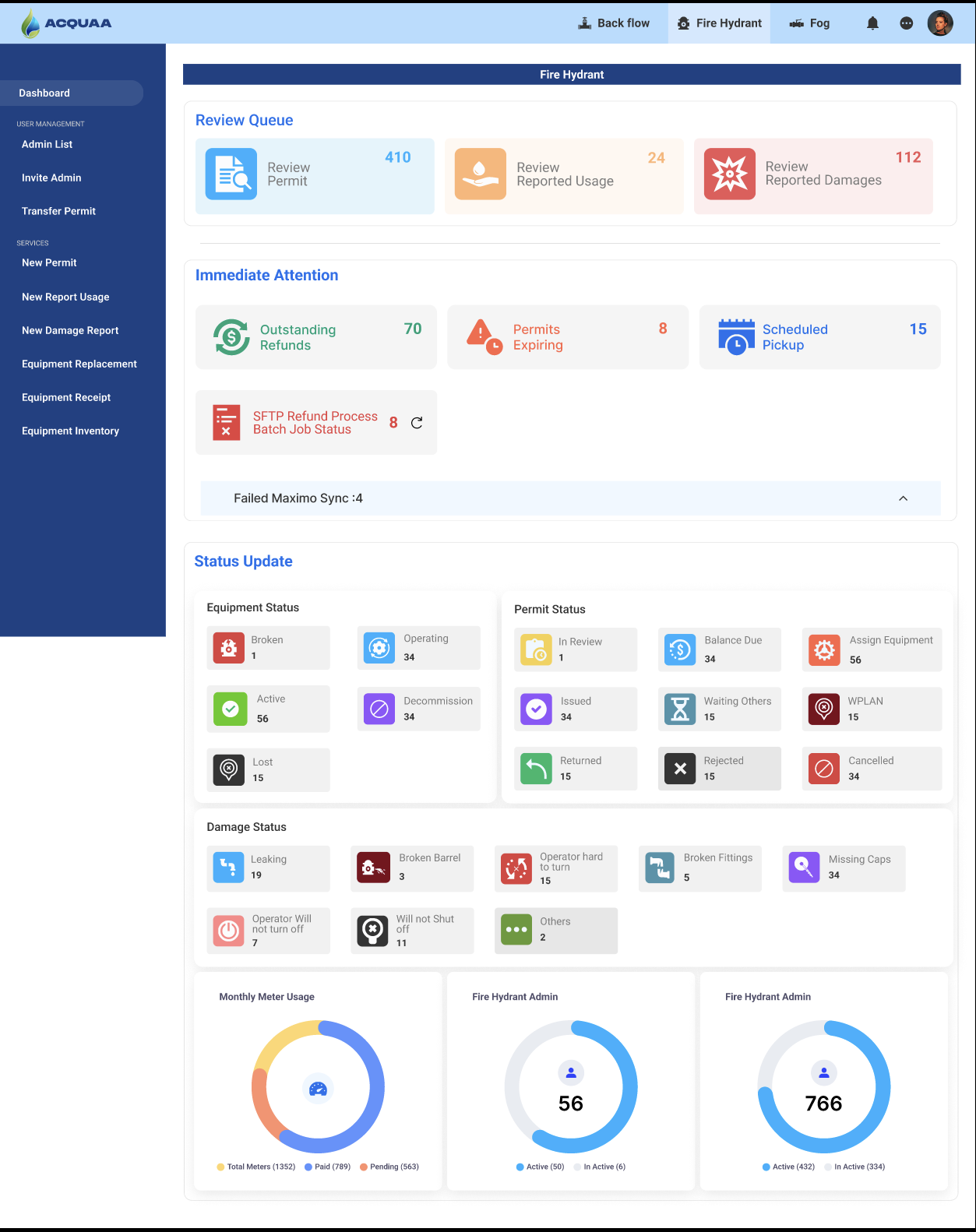
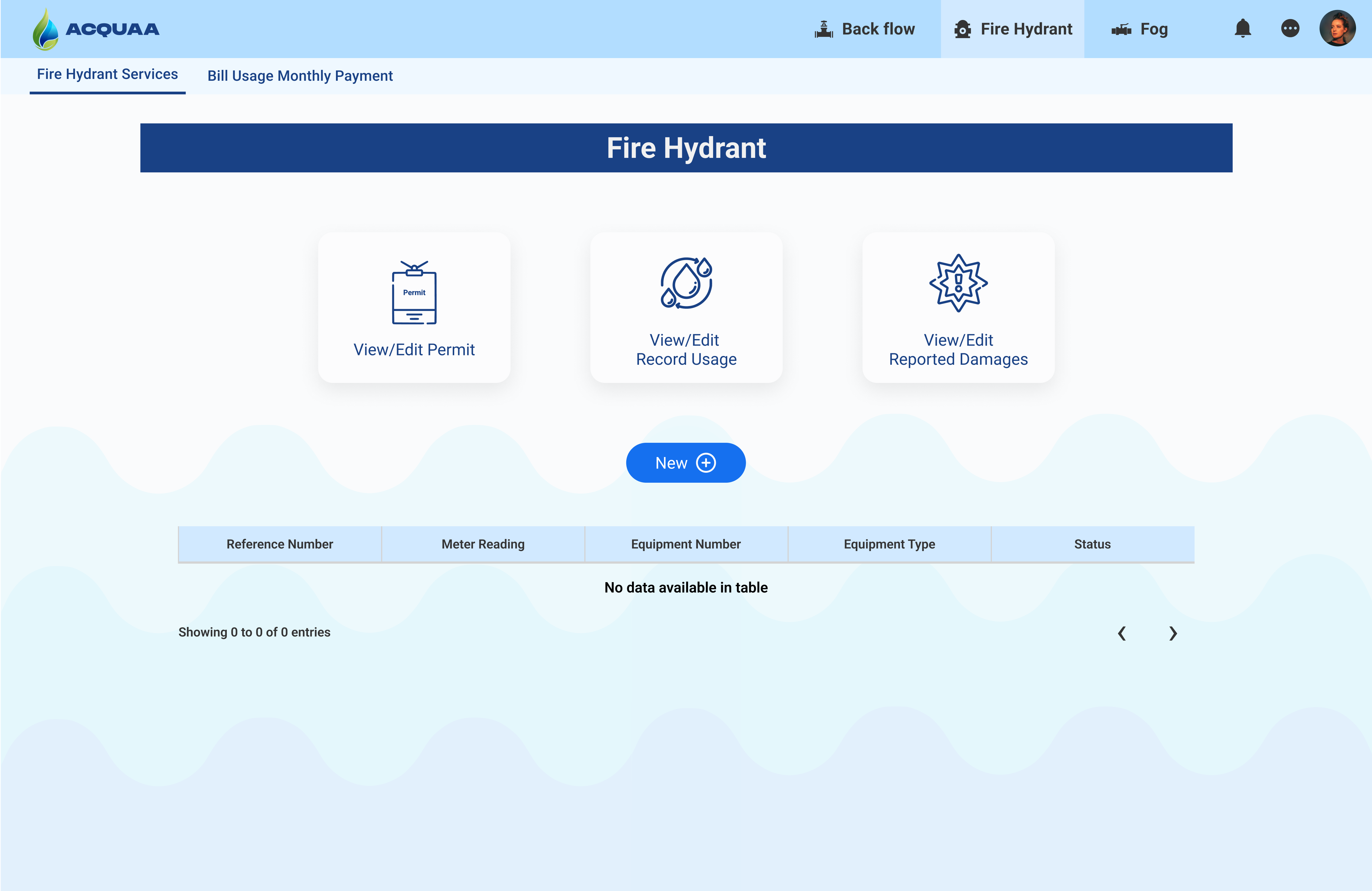
A look at the final designs
.png)
.png)
Measurable improvements delivered
The redesigned workflows produced concrete improvements across core operational metrics.
The redesign modernized a critical enterprise system, improved operational efficiency, and enabled faster, more reliable permit handling for municipal teams. The work also established scalable UX patterns reused across dashboards and notification systems.
How has this experience contributed to my growth?
Enterprise workflows with real-world consequences — late payments, missed permits, response delays — demanded meticulous attention to system feedback and error prevention at every step.
Working with 2 product owners and 2 business analysts meant every decision was cross-functional. Design rationale had to be expressed in business terms, not just UX principles.
A/B testing, heatmap analysis, and SUS scoring provided concrete evidence — moving conversations from opinion to data and accelerating stakeholder buy-in.
UX patterns from the Fire Hydrant permit module were successfully reused across dashboards and notification systems — validating a component-first design approach.
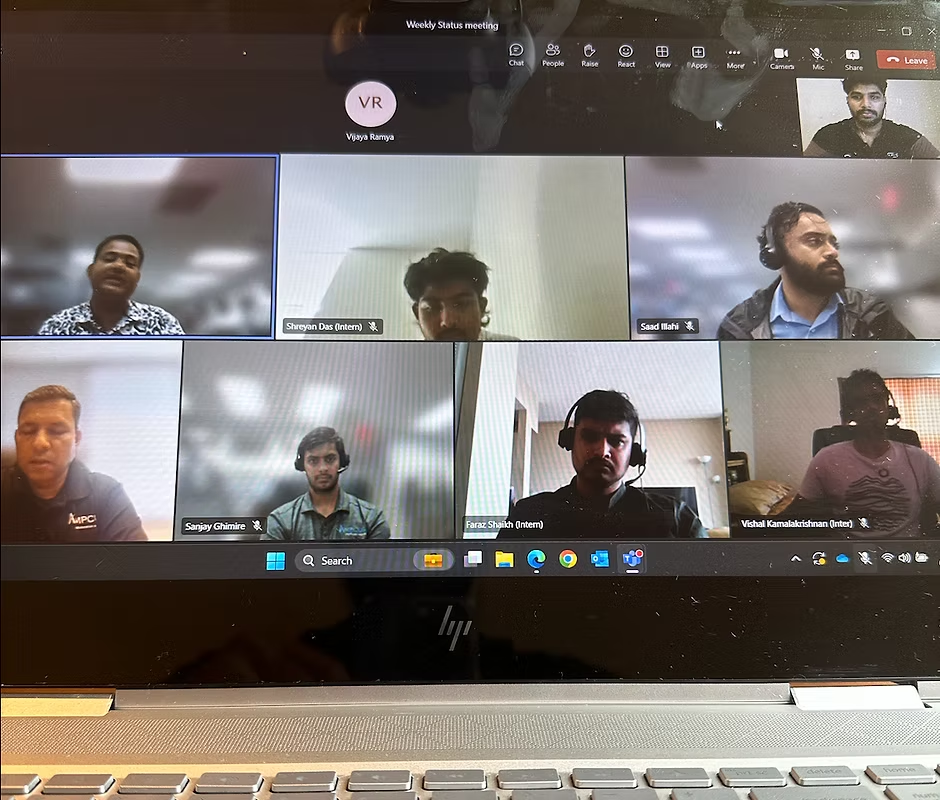
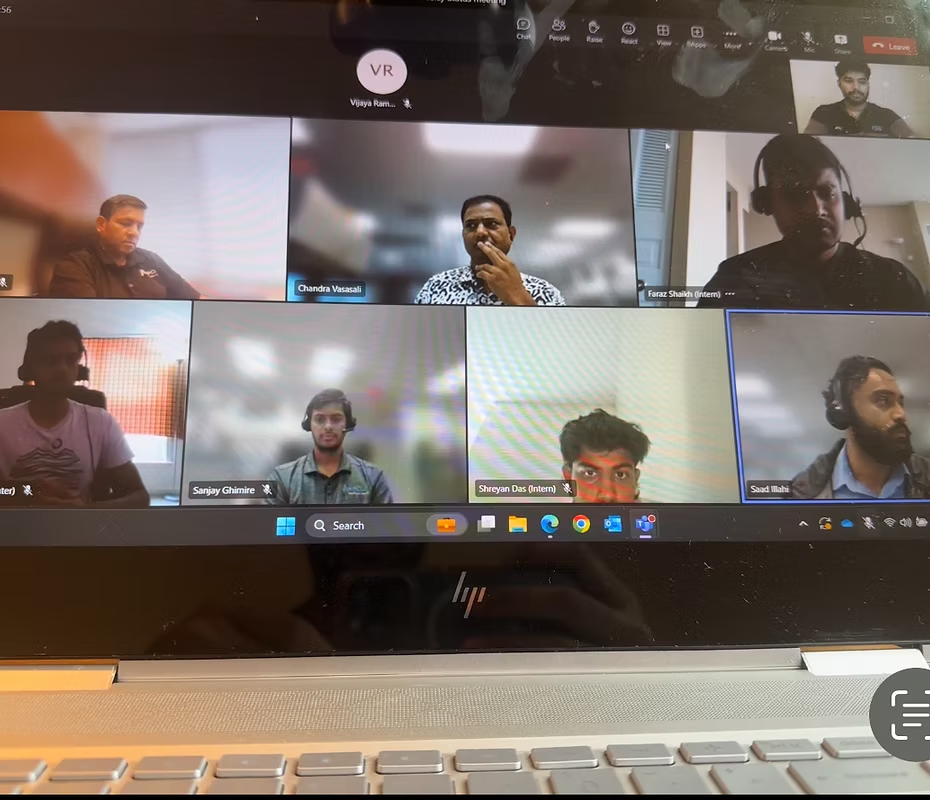
The people behind the work
DESIGNING FOR OPERATIONAL EXCELLENCE
Acquaa is a live platform serving DC Water's operational teams across the Washington, D.C. metro area.
←BACK TO PORTFOLIO